Would love to know what this is. I got it from my grandmother’s antique store 40 years ago.
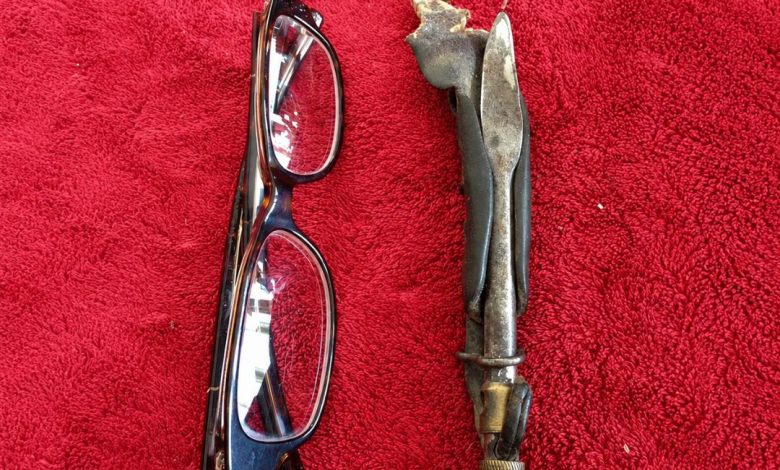
At first glance, this small metal-and-leather object may look unusual, but it is an antique hand corn husking tool, also called a corn husker, corn shucker, or corn husking peg/hook. It was designed to be worn on the hand with a leather strap, giving a farmer a stronger grip and a hard metal edge for removing dry husks from ears of corn.
Name: Primitive Corn Husking Tool With Leather Hand Strap
Main purpose: To help farmers remove husks from corn by hand
Likely period: Late 1800s to early 1900s, with similar hand corn huskers remaining in use into the mid-1900s. Corn husking fingers and gloves are recorded as appearing around the 1870s, and hand corn-husking devices were common before large-scale mechanized harvesting became standard.
Before modern corn pickers and combines, harvesting corn was hard physical labor. Farmers often picked ears by hand and threw them into wagons. The dry husks could be tough, rough, and painful to pull away all day, especially after a fall frost when corn was ripe and dry. Simple tools such as metal hooks, pegs, and leather hand guards helped reduce strain and protect the hands.
The tool in the photo appears to have a metal working point or blade, a leather hand strap, and small brass or metal fittings. The strap would hold the tool against the hand, while the metal end helped split or tear the husk away from the ear of corn. This made the work faster and less punishing than using bare fingers alone.
When was it made? The exact year cannot be confirmed from the photos alone because there is no visible maker’s mark or patent number. However, its materials and design match the type of farm hand tool commonly associated with the late 19th and early 20th centuries. Patented corn-husking devices also appeared in the early 1900s, including patents from 1904, 1905, and 1932, showing that this style of hand tool continued to evolve during that period.
What was it used for? This was a practical agricultural tool, not a decorative item. Its job was to help a farmer open, split, or peel back corn husks while harvesting. In the days before modern machinery, even a small tool like this could save time and reduce hand injuries during long days in the field.
Today, an antique corn husking tool like this is valued as a piece of American farm history. It represents a period when corn harvesting depended heavily on human labor, simple tools, and repeated handwork. For collectors, it is a reminder of the ingenuity of rural life: farmers used whatever was durable, affordable, and effective to make difficult work a little easier.
In short: this object is best identified as an antique primitive corn husking tool with a leather hand strap, most likely from the late 1800s or early 1900s, used to remove dry husks from ears of corn during hand harvesting.