Does anyone remember this old-fashioned item? It was crucial for achieving perfect results and was quite popular in earlier times.
What It Is
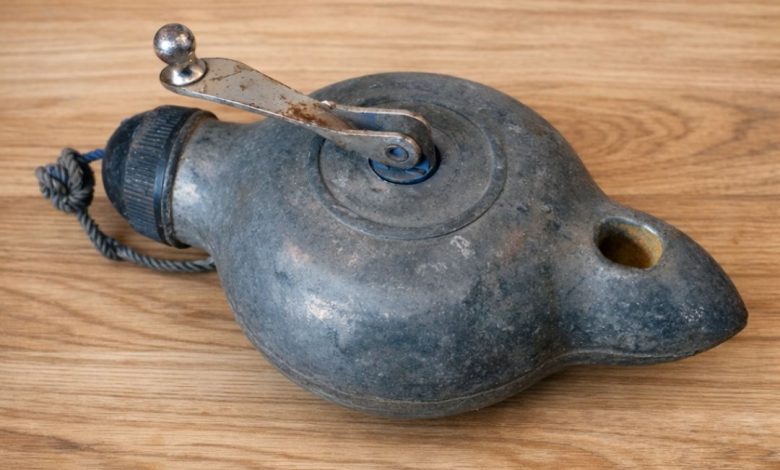
A chalk line (often called a chalk line reel or chalk box) is a string-based marking tool designed to snap a perfectly straight, chalked line across a surface. The photos show a vintage metal chalk line reel with a hand crank for rewinding the string.
Who Uses It (Common Trades)
This tool is widely used by:
- Carpenters (framing, decking, cabinetry layout)
- Bricklayers (course alignment, wall layout)
- Roofers / slaters / tilers (roof courses, shingle or slate alignment)
- Plasterers (straight guides for beads, leveling lines)
- Shipwrights (long layout lines on timber and panels)
- Pump makers / mechanics (layout lines for mounting and alignment)
Why It Matters
- Creates long straight lines faster than a ruler or straightedge
- Improves alignment and consistency over large surfaces
- Helps reduce rework by establishing clear layout reference lines
Key Parts You Can See in the Images
- Body (metal housing): Holds the chalk and protects the string mechanism
- String line: Coated in chalk; pulled tight to mark a line
- Crank handle: Rewinds the string quickly and neatly
- Line exit hole/nozzle: Where the string feeds out (often reinforced)
- End hook or ring: Anchors the string to an edge, nail, or temporary point
- Fill cap/plug (on many models): Used to add chalk inside the housing
How a Chalk Line Works (Step-by-Step)
- Fill the reel with chalk (blue, red, black, or specialty chalk depending on the job).
- Pull out the string to the desired length.
- Anchor one end (hook to a nail, edge, or a helper’s finger grip).
- Stretch the line tight and align it precisely with your layout marks.
- Snap the line by lifting the string slightly and letting it drop—this leaves a clean chalk imprint.
- Rewind using the crank to store the line.
Common Chalk Colors and What They’re For
- Blue chalk: General-purpose; easy to remove and commonly used indoors
- Red chalk: More permanent; often used where lines must survive weather or handling
- Black chalk: High-contrast on lighter materials; can be harder to remove
- Specialty chalks: Designed for wet surfaces, masonry, or improved adhesion
Where It’s Typically Used
- Framing and subfloors: Laying out walls, joists, and straight runs
- Roofing: Marking rows for shingles, slate, or tile alignment
- Masonry: Keeping brick courses straight and consistent
- Tile work: Establishing reference lines and borders
- Large panels and sheet goods: Straight cuts and placement lines
- Plaster/drywall layout: Guides for straight edges, trims, and alignment
Practical Tips for Cleaner, Straighter Lines
- Keep steady tension on the line before snapping
- Use a two-point mark (start and end) so the snapped line lands exactly where intended
- Avoid overfilling with chalk; too much can cause clumping and uneven lines
- If the line looks faint, re-chalk the string by pulling it out and letting it run through the chalk inside
- For critical work, snap a test line on scrap to confirm visibility and removability
Care and Maintenance (Especially for Vintage Metal Reels)
- Store in a dry place to limit rust on the housing and crank
- If the string is frayed, replace it to prevent snapping or uneven chalking
- Clean out old chalk periodically; damp chalk can cake and reduce performance
- Lightly lubricate moving parts only if needed, keeping oil away from the chalk chamber
Quick Identification: How You Can Tell It’s a Chalk Line
- A string line housed inside a container
- A crank mechanism to retract the line
- A small exit hole/nozzle where the line feeds out
- Evidence of chalk residue (often blue/red/black dust inside or near the line path)
Bottom Line
A chalk line is a simple but high-impact layout tool that helps tradespeople create long, straight, repeatable reference lines—making it essential for everything from carpentry and bricklaying to roofing, plastering, and shipbuilding.